

- Ultimate Spider-Man Vol. 1 (2000)
- Best Starting Point for Most Beginners
- Best Starting Point If You Want Peter Parker Married With Kids (2024)
- Best Starting Point If You Want Main Marvel Continuity
- Phase 1: The Classic Era (1962-1990)
- Phase 2: The Modern Mainline Era (2001-2023)
- Take this with you
- Phase 3: The Ultimate Spider-Man Saga (2000-2011)
- Phase 4: Miles Morales as a Standalone Hero (2016-Present)
- Phase 5: The New Ultimate Universe (2024-Present)
- Beginner Path
- Casual Path
- Completionist Path
- Where should I start reading Spider-Man comics?
- What is the best Spider-Man comic for beginners?
- Do I need to read Spider-Man in order?
- Is the new Ultimate Spider-Man (2024) connected to the original Ultimate Spider-Man (2000)?
- What is the difference between Peter Parker and Miles Morales?
- How many Spider-Man comics are there?
- Get the Ultimate Spider-Man Reading Guide
Reflects current series including Ultimate Spider-Man by Jonathan Hickman (2024, concluded at issue #24), Miles Morales: Spider-Man by Cody Ziglar (ongoing), and the latest Amazing Spider-Man developments.
🟢 Best Starting Point for Beginners
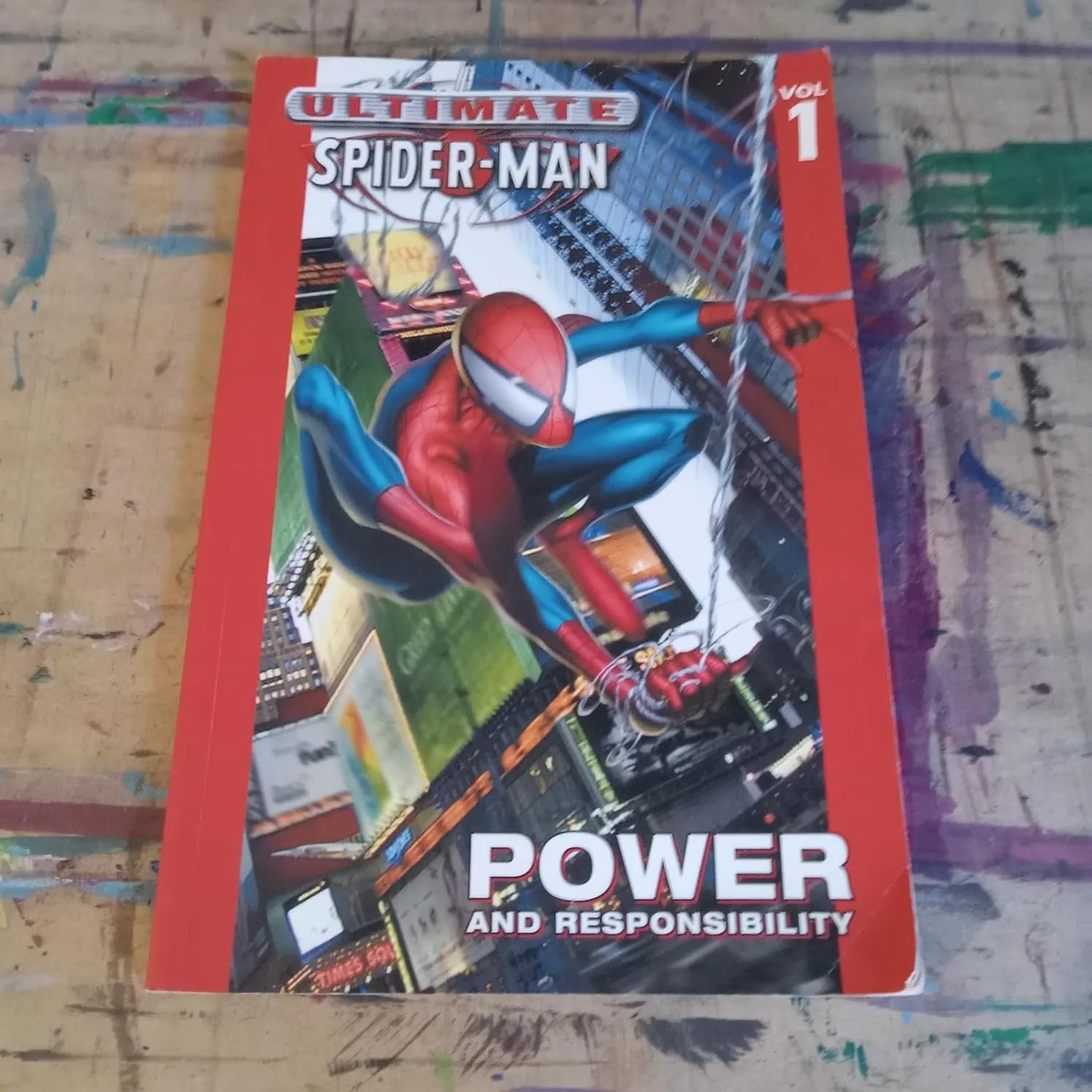
Ultimate Spider-Man Vol. 1 (2000)
The easiest and most recommended Spider-Man starting point period. If you read ONE Spider-Man comic, make it this.
✔ No prior knowledge needed ✔ Modern writing and pacing ✔ Hooks you immediately
Limited stock often runs out on Amazon
Confused by 60+ years of timelines, reboots, and alternate universes? You are not alone. Spider-Man has appeared in thousands of issues across dozens of titles, and figuring out where to start reading can feel like untangling an actual web.
The good news is that you do not need to read everything. This guide gives you a clear, beginner-friendly Spider-Man reading order based on your level, whether you want one quick entry point, the best stories ever told, or the full timeline from 1962 to today. For a broader look at where Spidey fits in the Marvel universe, our Marvel Comics reading order is the perfect companion.
No filler. No overwhelm. Just the right comics, in the right order, for you.
Where Should I Start Reading Spider-Man Comics?
This is the single most common question new readers ask, and the answer depends on what kind of story you want. Here are the three best starting points in 2026:
Best Starting Point for Most Beginners
Ultimate Spider-Man Vol. 1 (2000) by Brian Michael Bendis and Mark Bagley
This is the most recommended first Spider-Man comic for new readers and it has been for over two decades. Written in 2000 as a clean reboot for a new generation, it retells Peter Parker’s origin with updated dialogue, modern pacing, and no continuity baggage. You need zero prior knowledge. Start here and read straight through the full run (#1-133) for one of the most satisfying complete Spider-Man stories ever told.
Ultimate Spider-Man Vol. 1
2000 • A completely fresh take.
Best Starting Point If You Want Peter Parker Married With Kids (2024)
Ultimate Spider-Man by Jonathan Hickman Vol. 1: Married With Children (2024)
The Hollywood Reporter named this the Best Marvel Comic of 2024, and it was the third best-selling graphic novel of the entire year. Hickman and artist Marco Checchetto reimagine Peter Parker as an older, married father of two who becomes Spider-Man for the first time in his late thirties. Uncle Ben is alive. Green Goblin is a hero. Everything is refreshingly different, and it requires no prior reading. Four collected volumes are available, with the series concluding at issue #24.
Ultimate Spider-Man: Married With Children
2024 • Peter Parker is older, married, and becomes Spider-Man later in life.
Best Starting Point If You Want Main Marvel Continuity
Amazing Spider-Man: Brand New Day (2008)
If you want Spider-Man as he exists in the main Marvel Universe (Earth-616), Brand New Day is the cleanest modern entry point. It reset Peter Parker as a single, street-level hero in New York and introduced a rotating team of excellent writers. No need to know what happened before. Start with the Brand New Day Complete Collection Vol. 1 and go from there.
Amazing Spider-Man: Brand New Day
2008 • The cleanest entry into the main Marvel universe.
Quick Start Reading Path
Stop overthinking and start reading. These five comics are all you need to experience Spider-Man at his best:
- Ultimate Spider-Man Vol. 1 (Bendis, 2000): The best modern origin. Start here.
- Spider-Man: Blue (Loeb, 2002): A heartfelt story about Peter and Gwen. Perfect second read.
- Kraven’s Last Hunt (DeMatteis, 1987): The greatest Spider-Man story ever written. Completely self-contained.
- Superior Spider-Man Vol. 1 (Slott, 2013): The boldest reinvention. Doctor Octopus becomes Spider-Man.
- Miles Morales: Spider-Man Vol. 1 (Ahmed, 2019): The best jumping-on point for the next Spider-Man.
That is it. You are in.
Full Spider-Man Reading Order
Phase 1: The Classic Era (1962-1990)
You do not need to read this era before enjoying modern Spider-Man. Come back here once you are hooked and want to see where it all began. For a complete issue-by-issue guide, see Spider-Man’s publication history on Wikipedia.
- Amazing Fantasy #15 (1962): Spider-Man’s first appearance. Peter Parker gets bitten, Uncle Ben dies, the mission begins.
- Amazing Spider-Man #1-38 (1963-66) by Stan Lee and Steve Ditko: The foundational run. Establishes the full rogues gallery including Green Goblin, Doctor Octopus, Vulture, Electro, and Mysterio.
- Amazing Spider-Man #121-122 (1973): The death of Gwen Stacy. One of the most significant moments in comics history.
- Amazing Spider-Man #229-230 (1982): “Nothing Can Stop the Juggernaut.” A beloved standalone that works with no context.
- Kraven’s Last Hunt (1987): Six issues across three Spider-Man titles. Dark, psychological, and completely self-contained. The peak of classic Spider-Man.
Best collected editions for this era: Amazing Spider-Man Epic Collections (Marvel), or Marvel Masterworks hardcovers for earlier issues.
Phase 2: The Modern Mainline Era (2001-2023)
This is the era most readers mean when they talk about current Spider-Man. It covers over two decades of Amazing Spider-Man stories in the main Marvel continuity (Earth-616).
The Straczynski Years (2001-2007)
- Amazing Spider-Man by J. Michael Straczynski Vol. 1 (ASM #30-35, 2001): Emotional, mature storytelling. Introduces Morlun and the Spider-Totem mythology. The JMS Omnibus is available on Amazon.
- The Other: Evolve or Die (2005-06): A bold arc about Peter’s powers and identity. Best read after Straczynski’s earlier issues.
Brand New Day and the Slott Era (2008-2018)
- Brand New Day (ASM #546-647): The soft reboot. Peter is single, broke, and swinging through a fresh status quo. Clean entry point. Fun, varied, and fast-paced.
- Big Time (ASM #648-673): Peter gets a tech job at Horizon Labs, a new stealth suit, and bigger villains. Slott’s run hits its stride here.
- Spider-Island (ASM #666-673): Everyone in New York City gets spider powers. Fun, inventive, and surprisingly emotional.
- Superior Spider-Man Complete Collection (Slott, 2013-14): Doctor Octopus swaps minds with Peter and tries to do the job better. One of the most inventive arcs in Spider-Man history.
- Spider-Verse (Slott, 2014-15): Every version of Spider-Man unites across the multiverse. Essential reading before the animated films.
- Going Big through the Clone Conspiracy (2016-17): Slott’s later run gets darker and more serialized. Best read after the earlier arcs.
The Zeb Wells Era (2022-2024)
- Amazing Spider-Man by Zeb Wells: The most recent main-continuity run. Darker and more serialized. Best read after the Slott era. The run concluded in late 2024 ahead of new creative changes.
Take this with you
Want a clean, printable version of this reading order? Download the checklist and follow it step-by-step without getting lost.
Phase 3: The Ultimate Spider-Man Saga (2000-2011)
A completely separate universe (Earth-1610) that ran parallel to the main Marvel comics. Clean, modern, and still one of the best Spider-Man runs ever produced.
- Ultimate Spider-Man #1-133 by Bendis and Bagley (2000-09): The definitive modern Spider-Man origin and run. Read the Ultimate Collections Vol. 1-7 for the complete Peter Parker saga.
- Ultimate Comics: Fallout #1-6 (2011): The aftermath of Peter’s death. Bridges Peter’s legacy and Miles Morales’s arrival. Brief but emotionally essential.
- Ultimate Comics: Spider-Man by Brian Michael Bendis Vol. 1 (2011-13): Miles Morales becomes Spider-Man. A natural and deeply moving continuation.
Phase 4: Miles Morales as a Standalone Hero (2016-Present)
After the Ultimate Universe ended in Secret Wars (2015), Miles Morales joined the main Marvel continuity. His solo series are all accessible without prior knowledge. See our complete Miles Morales reading order for the full picture.
- Spider-Man: Miles Morales by Brian Michael Bendis Vol. 1 (2016): Miles adjusts to life in the main Marvel Universe alongside Peter Parker. Strong bridge between his Ultimate origins and modern stories.
- Miles Morales: Spider-Man by Saladin Ahmed Vol. 1 (2019): The best jumping-on point for Miles as a standalone hero. Character-driven, emotionally smart, and welcoming to new readers.
- Miles Morales: Spider-Man by Cody Ziglar (2023-ongoing): The current ongoing series. Start at issue #1 of Ziglar’s run for the freshest Miles entry point.
Phase 5: The New Ultimate Universe (2024-Present)
In 2024, Marvel launched an entirely new Ultimate Universe (Earth-6160), separate from both the original 2000s Ultimate comics and the main continuity. Think of it as a third, completely fresh timeline.
Ultimate Spider-Man by Jonathan Hickman (2024, concluded at issue #24)
This version of Peter Parker is a married father of two in his late thirties who becomes Spider-Man for the first time. Uncle Ben is alive. Green Goblin (Harry Osborn) is reimagined as a superhero. The Kingpin controls the city. It is a completely self-contained story requiring no prior reading. Named The Hollywood Reporter’s Best Marvel Comic of 2024 and the third best-selling graphic novel of 2024.
Four collected volumes are available:
- Vol. 1: Married With Children (issues #1-6): The setup. Instantly gripping.
- Vol. 2: The Paper (issues #7-12): The Spider-Man of this world finds his footing.
- Vol. 3: Family Business (issues #13-18): The stakes escalate significantly.
- Vol. 4: One Last Day (issues #19-24): The conclusion of Hickman’s planned run.
The series concludes cleanly, making it one of the few modern superhero runs with a proper ending. Also worth reading after completing the main run: Ultimate Spider-Man: Incursion (June 2025), a crossover with Miles Morales: Spider-Man.
Best Spider-Man Comics of All Time
These titles appear on every recommended list, hold up across decades, and are ideal starting points for new readers. For a deeper breakdown, see our full guide to the best Spider-Man comics for beginners.
- Kraven’s Last Hunt (1987): The greatest Spider-Man story ever written. Dark, literary, and completely standalone. Works with zero context.
- Ultimate Spider-Man Vol. 1 (Bendis, 2000): The definitive modern origin. The best single starting point for new readers.
- Spider-Man: Blue (Loeb, 2002): Heartfelt, gorgeous, and emotionally devastating. One of the best comics for readers who appreciate quiet character work.
- Superior Spider-Man Vol. 1 (Slott, 2013): The boldest reinvention of Spider-Man since the character’s creation. Endlessly inventive.
- Spider-Verse (Slott, 2014-15): Every version of Spider-Man together. Essential before Into the Spider-Verse.
- Miles Morales: Spider-Man by Saladin Ahmed Vol. 1 (2019): The best single starting point for Miles as a solo hero.
- Ultimate Spider-Man: Married With Children (Hickman, 2024): The freshest take. Complete, self-contained, and stunningly well-crafted.
- Amazing Spider-Man: Nothing Can Stop the Juggernaut (1982): A beloved classic that works perfectly as a standalone read.
Modern Entry Points (2024-2026)
Ultimate Spider-Man by Jonathan Hickman: Married With Children (2024) The single best way to start reading Spider-Man right now. Peter Parker is older, married with two kids, and becoming a hero for the first time. Four volumes collect the complete story. No continuity required. See the official Marvel series page for details.
Miles Morales: Spider-Man by Cody Ziglar (2023-ongoing) The current Miles Morales series. Accessible to readers who know Miles from the animated films but have never read the comics. Start at issue #1 of Ziglar’s run. See the official Marvel Miles Morales page for current issue details.
Amazing Spider-Man: Brand New Day Complete Collections (2008) Still the cleanest entry point into main Marvel continuity for Peter Parker. Two complete collection volumes cover the opening arc thoroughly and set up the full Slott era that follows.
What to Skip (For Now)
- The Clone Saga (1994-96): The most infamous Spider-Man storyline. Sprawling, contradictory, and confusing even for longtime fans. Come back after reading the essentials, if at all.
- One More Day (ASM #544-545, 2007): Peter makes a deal with Mephisto to save Aunt May and erases his marriage to MJ. Universally divisive. Not a good first read. Jump straight to Brand New Day instead.
- Maximum Carnage (1993): A 14-issue crossover event involving Carnage and many supporting characters. Fun in context, but confusing without knowing Venom, the symbiotes, and the wider supporting cast first.
- Civil War Spider-Man tie-ins (2006-07): Important to the main Marvel continuity but require significant context about the wider event. Save for after you have a solid Marvel foundation.
- Spider-Man 2099 ongoing (1992-96): A creative futuristic concept but very much a product of its era. Worth sampling eventually, not for beginners.
Choose Your Reading Path
Beginner Path
For total newcomers who want the essential Spider-Man experience in the fewest possible reads.
- Ultimate Spider-Man Vol. 1 (Bendis, 2000)
- Spider-Man: Blue (Loeb, 2002)
- Superior Spider-Man Vol. 1 (Slott, 2013)
- Miles Morales: Spider-Man by Saladin Ahmed Vol. 1 (2019)
Casual Path
For readers who want the best stories across different eras without following full runs.
- Kraven’s Last Hunt (1987)
- Ultimate Spider-Man Vol. 1 (Bendis, 2000)
- Spider-Man: Blue (Loeb, 2002)
- Miles Morales: Spider-Man by Saladin Ahmed Vol. 1 (2019)
- Ultimate Spider-Man: Married With Children (Hickman, 2024)
Completionist Path
For readers who want Spider-Man’s full story in order.
- Amazing Fantasy #15 plus Amazing Spider-Man Epic Collection: Great Power (1962-65)
- Amazing Spider-Man Epic Collections Vol. 2 onward through the Bronze Age (1966-1985)
- Kraven’s Last Hunt (1987)
- Amazing Spider-Man by JMS Omnibus Vol. 1-2 (2001-07)
- Ultimate Spider-Man Ultimate Collections Vol. 1-7 (Bendis, 2000-09)
- Ultimate Comics: Spider-Man Miles Morales by Bendis Vol. 1-4 (2011-13)
- Amazing Spider-Man: Brand New Day Complete Collections (2008-10)
- Amazing Spider-Man: Big Time through Spider-Island (Slott, 2010-12)
- Superior Spider-Man Complete Collection (Slott, 2013-14)
- Spider-Verse (Slott, 2014-15)
- Miles Morales: Spider-Man by Saladin Ahmed Vol. 1 onward (2019)
- Ultimate Spider-Man by Jonathan Hickman Vol. 1-4 (2024-25)
Frequently Asked Questions
-
Where should I start reading Spider-Man comics?
Start with Ultimate Spider-Man #1 (2000) by Brian Michael Bendis. It is a clean, modern reboot of Peter Parker’s origin that requires zero prior knowledge and gives you a complete, satisfying story across 133 issues. If you want something even newer, Ultimate Spider-Man: Married With Children (2024) by Jonathan Hickman is a completely fresh take that was the third best-selling graphic novel of 2024 and works perfectly as a first Spider-Man comic.
-
What is the best Spider-Man comic for beginners?
The most recommended single starting point is Ultimate Spider-Man Vol. 1 (Bendis, 2000). For a recent option, Ultimate Spider-Man by Hickman Vol. 1: Married With Children (2024) was named The Hollywood Reporter’s Best Marvel Comic of 2024 and requires no prior reading. Both are beginner-friendly and available in collected trade paperbacks.
-
Do I need to read Spider-Man in order?
No. Most Spider-Man comics are written so new readers can jump in without backstory. You can start with a standalone arc, read a modern reboot, or pick up the current ongoing series. Continuity is a map, not a requirement. Start with what excites you most and explore backwards or forwards from there.
-
Is the new Ultimate Spider-Man (2024) connected to the original Ultimate Spider-Man (2000)?
No. Despite sharing the name, they are set in entirely separate universes with different versions of Peter Parker. The Bendis series (2000-2011) is set on Earth-1610 with a teenage Peter. The Hickman series (2024) is set on Earth-6160 with an older, married Peter. Both are excellent and completely independent from each other.
-
What is the difference between Peter Parker and Miles Morales?
Peter Parker is the original Spider-Man, created in 1962. Miles Morales is a separate character, introduced in 2011, who became Spider-Man in the Ultimate Universe after Peter’s death. Miles is of Afro-Latino descent and has a unique power set that includes venom blast and camouflage abilities. Both are currently active Spider-Men in the main Marvel comics. Our Miles Morales guide covers where to start with his story.
-
How many Spider-Man comics are there?
Peter Parker has appeared in thousands of issues across dozens of titles since 1962. Reading every Spider-Man comic in order would take years. This guide covers the titles that actually matter. Follow one of the three reading paths above and you will experience the best Spider-Man comics without getting buried in decades of continuity.
Get the Ultimate Spider-Man Reading Guide
If you want a single printable resource to take to the comic shop or use offline, the Spider-Man reading guide PDF compiles everything on this page into a clean, scannable format.
More Guides You Might Like
- X-Men Reading Order
- Batman comics in order: Batman full reading order (beginner-freindly)
- Best Spider-Man Comics for Beginners: Our ranked picks by era
- Miles Morales Reading Order
- Marvel Comics Reading Order: The big picture for Marvel newcomers
- What is a TPB? Trade Paperbacks Explained: How to buy Spider-Man comics in collected editions